


Clogged Drain vs. Sewer Line Problem — How to Tell the Difference
November 8, 2025A slow-draining sink is annoying. A sewer backup is a nightmare.
Knowing the difference between a minor clog and a major sewer line issue can save you thousands in emergency repairs — and a lot of mess.
Homeowners across Atlanta, Marietta, and Sandy Springs often mistake early sewer warning signs for simple drain blockages.
Here’s how to spot the difference — and when it’s time to call a professional plumber.
1. The Simple Clogged Drain
A typical drain clog usually affects one fixture — like a sink, bathtub, or shower.
The cause is often grease, hair, soap scum, or food debris trapped near the drain opening.
Common symptoms:
- Water drains slowly in one fixture only
- Gurgling or bubbling in that same sink or tub
- Foul odor coming directly from that drain
🧰 DIY Fix: Try plunging or using a small drain snake. For kitchen sinks, flush with boiling water and baking soda.
If the clog clears easily, it’s likely not a sewer problem.
2. The Bigger Issue: Sewer Line Problems
If more than one drain in your home is acting up — especially lower-level fixtures — you may have a sewer line blockage.
Sewer clogs happen when the main line connecting your home to the city sewer or septic system becomes obstructed by roots, grease buildup, or collapsed pipes.
Warning signs:
- Multiple drains are slow or backed up at once
- Water backs up into the tub or shower when you flush the toilet
- Gurgling sounds from toilets or floor drains
- Sewage smell near basement drains or outdoors
These symptoms indicate the blockage is deep in your system — not something a plunger will fix.
3. Common Causes of Sewer Line Issues in Atlanta
Atlanta’s older neighborhoods often have aging clay or cast-iron sewer pipes that are prone to cracks and root invasion.
Tree roots searching for moisture slip through tiny openings and expand, blocking water flow.
Other causes include shifting soil, grease buildup, or foreign objects flushed down toilets.
If your home is over 30 years old, it’s worth scheduling a sewer line camera inspection every few years.
4. How to Tell the Difference Quickly
| Symptom | Likely a Drain Clog | Likely a Sewer Problem |
|---|---|---|
| Only one fixture drains slowly | ✅ | |
| Multiple drains affected | ✅ | |
| Odor in one sink or shower | ✅ | |
| Water backs up in lower drains/toilets | ✅ | |
| Gurgling in multiple fixtures | ✅ |
If your checklist shows more than one ✅ in the sewer column — call a professional immediately.
5. What You Should Not Do
- ❌ Don’t keep running water to “flush it through” — you’ll risk flooding.
- ❌ Don’t pour harsh chemicals; they can corrode pipes.
- ❌ Don’t ignore recurring clogs — they’re usually a sign of deeper issues.
Instead, turn off your main water supply if backup begins and contact ATL Plumber for same-day sewer diagnostics.
6. Professional Drain & Sewer Solutions
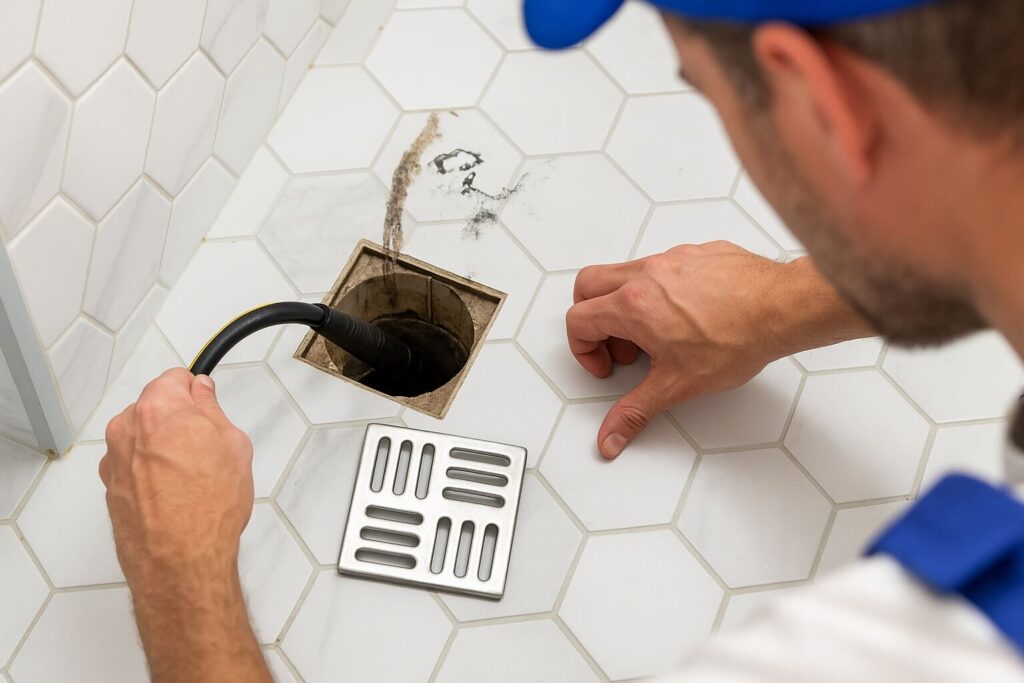
At ATL Plumber, our team uses advanced camera inspection and hydro-jetting technology to locate and clear blockages safely.
Whether it’s a clogged drain or a broken main line, we’ll restore full flow quickly — without unnecessary digging or damage.
Final Thoughts
A slow drain can be a quick fix — or a warning of something much worse.
If you’re unsure, trust your instincts and call the experts at ATL Plumber.
We proudly serve Atlanta, Roswell, Marietta, and Sandy Springs with reliable drain cleaning and sewer repair services that keep your home running smoothly.